
Rupee hits 2-month low, down 21 paise against dollar.

India needs to sustain a GDP growth rate of 8 per cent to become a five trillion dollar economy by 2025, the Economic Survey has stated.

Infosys was the top Sensex loser along with other index heavyweights ITC and HDFC.

The threshold for identification of BOs of FPIs on controlling ownership interest is 25 per cent in case of companies and 15 per cent in case of partnership firms

In stock market parlance, "meme stock" was certainly the word of the year. Coined to mean those stocks that gain sudden popularity on the internet with resultant high prices, it was used to derisively describe the behaviour of retail traders globally who entered the market in huge numbers in the two Covid-19 years. A recent study, "Market Concentration and Retail Participation in India", by the National Stock Exchange economics team led by their chief economist Tirthankar Patnaik shows unlike these impressions, the retail investors, at least in India, have not performed inconsistently.

Disclose foreign assets, redesignate NRO a/c and open a Resident Foreign Currency a/c to park forex earnings

'If the Union Budget can provide incentives for animal spirits to come as well as induce demand stimulus and consumption, the Budget would have done a wonderful job.'

Sensex climbs higher on favourable global cues.
.jpg)
Because of corrections in property prices and oversupply in the office segment, the rich are investing in hospitals, warehouses, ATMs and other alternatives to traditional investment options.

In a recent article, Rajan has ridiculed critics of the exchange rate policy.

Real estate firms like DLF, Prestige, Phoenix Mills to benefit.

FDI is a major driver of economic growth and a source of non-debt finance for the economic development of the country. The government has put in place an investor-friendly policy on FDI, under which investment up to 100 per cent is permitted on the automatic route in most sectors/ activities. At $ 64.37 billion, FDI in 2018-19 is the highest ever investment received for any financial year.

Companies in the small-cap universe are having a dream run - the Nifty Smallcap 100 index has shot up more than 25 per cent on a year-to-date basis, even as the benchmark Nifty is up 7 per cent. This is the best start for the index since 2017 when the Nifty Smallcap 100 index surged 32.3 per cent between January 1 and May 10. However, in terms of outperformance to the Nifty, this year's performance is the best in more than a decade. A combination of sectoral tailwinds and lack of institutional selling pressure has helped small companies escape from the correction triggered by the second wave of Covid-19.
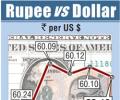
In New York, the dollar was up last Friday against its major rivals following weak German economic data.

The adjustment orders for AY2012, are expected between January and March 2016.

It said New Delhi increased its purchase of foreign exchange over the first three quarters of 2017 which does not appear necessary.

Gilt funds make sense only if you want to take a tactical view on interest rates and are looking for a short-term duration.

Of the 854 stocks that quoted less than Rs 20 on March 23, 2020 - when the Sensex hit more than a three-year low - 482 have doubled.

The coming Union Budget might give relief to foreign portfolio investors from taxation on indirect transfers.

The new norms provide an operational framework for FPIs, a new class of overseas investors that club all existing class of investors like foreign institutional investors and Qualified Foreign Investors.

Market players say following the tax cuts, the market mood had changed from bearish to positive, which should help sustain the rally.

The fall was led by banking stocks, with IndusInd Bank, Kotak Bank, Federal Bank, Axis Bank, ICICI Bank, HDFC Bank and SBI declining up to 2.36 per cent.

Since 2000, China has had the world's largest outflow of HNIs.
Returns turn negative as FIIs turn sellers of equities in October.

Several MF managers are trying to tell their investors that it could be the best time to invest as India is different.

A first in 7 years, the combined institutional investor flow stands at Rs 69,000 crore in 2016-17

Chaos in Parliament threw a spanner in the government's efforts to revive the economy and kick-start reforms.
New regime places more limits on unregulated foreign entities

The primary issue market has hit an all-time high with 63 corporates raising Rs 1,18,704 crore through main-board initial public offerings (IPOs) so far in 2021, which is nearly 4.5 times more than the Rs 26,613 crore raised through 15 issues in 2020 and almost double of the previous best of Rs 68,827 crore in 2017, according to a report. Pranav Haldea, managing director of Prime Database Group, said the IPO frenzy was driven by new-age loss-making technology start-ups along with strong retail participation, and the resultant massive listing gains were the key highlights of the year. Another highlight was only 51 per cent or Rs 103,621 crore of the total Rs 202,009 crore was fresh capital raising and the remaining Rs 98,388 crore were offers for sale.
'If I had to highlight one area that will do well, it is the financial assets -- that is the private sector banks, insurance and mutual funds.'

While a coordinated aggressive monetary easing from the central banks is most likely to offer some respite in the near-term, it is unlikely to improve the sentiments.

'It will be best for investors to have a systematic investment plan in mid-cap and small-cap funds with a three-/five-year horizon.'

While selling started in April, it has intensified this month, with FPIs pulling out $1.1 billion and $2.5 billion from equities and debt market, respectively

The regulator may float consultation papers for FPIs and private equity funds and the final decision will be taken after taking into account views of all the stakeholders

 © 2026 Rediff.com - Advertise with us - Disclaimer - Privacy Policy - Sitemap - Feedback - About us - Terms of use - Grievances